The elements of Earth
Elementals
Nature and groundingElementals are the ancient guardians of earth, water, air and fire. They restore humanity to sacred communion with nature and the body's own wisdom.
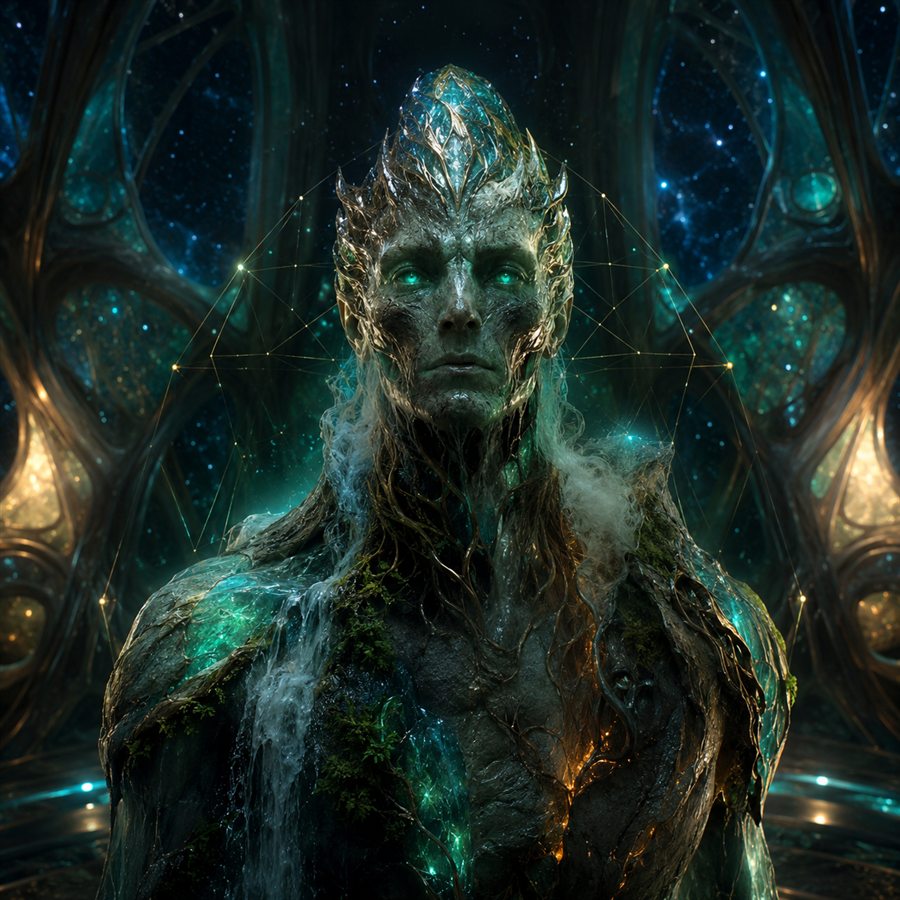
Starseed origin and star nation
Origin, qualities, mission and contact with Earth.
- First known contact
- 1566 – the teachings of Paracelsus
- Home
- Earth and the elements of nature
Opening of contact. Elementals have been met in nature for as long as there have been people in forests, but the book of Paracelsus published in 1566 gave them names and borders: gnomes of earth, undines of water, sylphs of air and salamanders of fire. Two of those words he invented himself. The clearest modern opening came on the sand dunes of northern Scotland, where Dorothy Maclean and the Caddys settled into a caravan in 1962. A year later she began listening to the devas of the plants, and the guidance concerned no cosmic secrets but compost, watering and spacing. The Findhorn garden became famous, and the sand produced, among other things, a nineteen-kilo cabbage.
The nation's home world. Elementals have no second home planet. Their home is Earth itself: soil, water, air, fire and the visible and subtle levels of each. This is the one star nation whose home world the reader is already standing on, which is why they are not reached by looking up. Their world is also very small at any one time. An elemental does not guard nature in general but this stream, this rock, this one old tree. Nobody answers on behalf of nature in the abstract.
How does this nation appear? Elementals are met in forests, beside water, in ritual and in dreams. They can make themselves visible as small figures, as light phenomena, as an unusual movement of water or wind, or as a powerful certainty that the place itself holds a consciousness of its own. They rarely appear on request. Most often the meeting happens at the moment a person has stopped trying: mid-walk, tired, thinking about something entirely different.
Its mission beside humanity. Paracelsus wrote that elementals lack something humans have. Findhorn turns the view around: humans lack something they have, namely the ability to live in a place without separating themselves from it. The mission is therefore an exchange and not a hierarchy. Elementals also see to it that stellar contact does not lift a person off the ground. Every other nation is turned toward by looking up and the elementals by looking down, and only those who know both directions stay upright.
How does contact open? Contact opens in nature, beside water, in moving air, in watching fire or touching soil. The message rarely arrives in long sentences; more often it is a feeling, an image or an immediate understanding. Nor does it usually answer the question that was asked. A person asks about the direction of their life and receives, in reply, a remark about breathing too shallowly. The answer is embarrassingly often correct.
How can its presence be recognised? A sudden gust of wind, the unexpected presence of an animal, an odd movement of water or a deep quiet settling over a wood are their signs. The real mark, though, is direction: stellar contact raises the gaze, an elemental meeting lowers it into the body, the ground and this moment. Afterwards you recognise it because ordinary life changes slightly and practically. Someone starts drinking water, someone goes outside, someone stops hurrying halfway through the day. It is modest evidence, and reliable for exactly that reason.